

[ad_1]
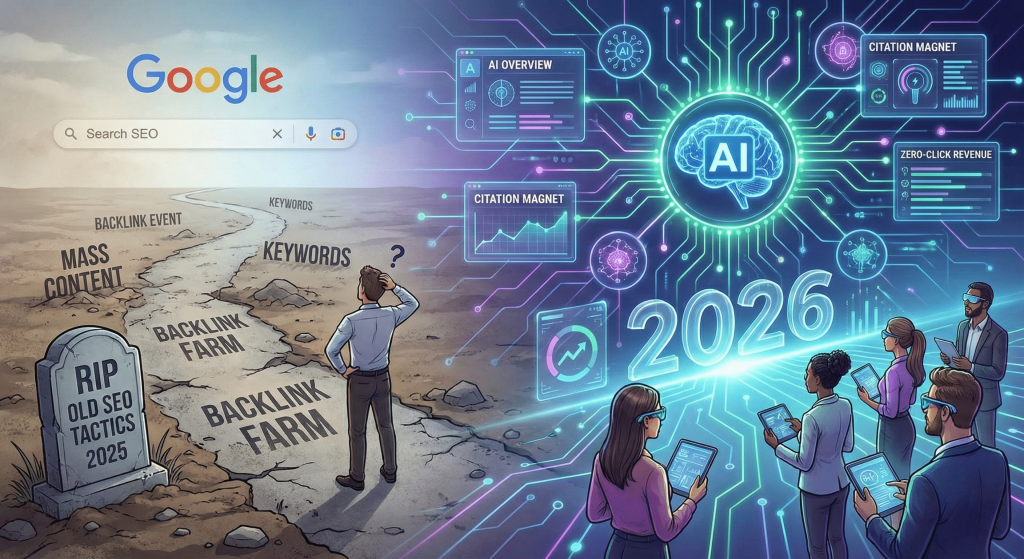
The world of search engine optimization is undergoing a seismic shift. As we settle into 2026, the strategies that dominated just a year or two ago are not only becoming obsolete but are actively dangerous to your digital presence. The rise of Large Language Models (LLMs) like ChatGPT, Claude, and Gemini has fundamentally changed how information is discovered, processed, and presented to users.
In a recent deep dive, SEO expert Steve Toth, founder of the popular SEO Notebook, laid out the new reality. The key takeaway is clear: the era of chasing blue links on a Google search results page is fading. The new frontier is about omnipresence, retrievability, and becoming the definitive source of truth for AI models.
Here is a breakdown of the critical strategies you need to adopt, the old tactics you must abandon, and how to structure your content to thrive in the age of AI search.
The 2026 “Kill List”: What to Stop Doing Immediately
To move forward, we must first identify what’s holding us back. Toth’s “Kill List” for 2026 highlights practices that were once common but now serve as a fast track to irrelevance or, worse, penalization.
- Mass Content Generation (The “SEO Heist” Era): The days of churning out thousands of AI-generated blog posts to capture long-tail keyword volume are over. This “spray and pray” approach, often called an “SEO Heist,” is now a liability. Search engines and AI models are getting better at detecting low-value, derivative content. The focus has shifted entirely from volume to landing page optimization, creating high-quality, authoritative pages that answer specific user needs.
- “Fast-Twitch” SEO Testing: The old feedback loop of making a small tweak to an H2 tag and seeing a ranking change within minutes is dead. AI SEO is probabilistic, not deterministic. You won’t get the same answer every time, and the results of your changes are far less immediate and predictable. Testing now requires a longer-term, more strategic view.
- Ignoring “Deal Breakers”: Targeting high-level keywords without addressing the specific, nitty-gritty questions users have is a losing strategy. In the B2B world, for example, users are using AI for “Deep Research.” They aren’t just looking for “best CRM”; they are asking, “Does it integrate with Slack?” or “Is it on-premise or cloud-based?”. If your content doesn’t explicitly answer these “deal breaker” questions, you will be ignored during this critical qualification phase.
The New Playbook: Structuring for Retrieval and Omnipresence
So, what works now? The goal is to make your content a “citation magnet”—a piece of information that an AI model finds so valuable and easy to process that it references it in its answer.
1. The “Intro/Outro” Rule for Content Structure: Steve describes a specific structure designed for retrieval, often referred to as the “100-300 token” concept. LLMs prioritize the beginning and end of your content, often skimming or “hallucinating” the middle. To counter this:
- The Intro (The Promise): Your opening paragraph must be “highly compact and descriptive.” Think of it as a prompt for the AI. It should clearly state what the article will cover.
- The Outro (The Summary): Your conclusion should be a strict summary of the key findings, reinforcing the main points for the AI.
- The “Murky Middle”: For the body of your content, avoid long-winded text. Instead, use highly structured formats like tables to present data. This makes it much easier for LLMs to parse and extract accurate information.
2. The Power of Omnipresence: Your brand’s presence shouldn’t be limited to your own website. To be cited by AI, you need to be “everywhere.” Platforms like LinkedIn and Reddit are frequently mined by LLMs for information. Even public Facebook group posts can become top citations if they are indexed. The strategy is to repurpose your high-quality content across these platforms to increase your chances of being “found” by the models.
3. The “Zero-Click” Reality and New Metrics: As AI provides more direct answers, traditional click-through rates are declining. In this “zero-click” era, you must shift your focus from traffic graphs to bottom-line business impact. Measure revenue and leads generated. Implement self-attribution methods, like asking customers “Where did you find us?”, to understand the true source of your business.
4. Reverse-Engineering AI for B2B: For B2B companies, the “Deep Research” agent in models like ChatGPT is a goldmine. You can reverse-engineer this process. Run a query related to your product and see what qualifying questions the AI asks. Then, go back to your website and ensure your product pages explicitly answer those exact questions. This positions you to win the AI’s recommendation.
5. Be Explicit About Who You Are For: Don’t leave LLMs guessing. Create an “AI Info Page” or use your footer/about page to explicitly state your Ideal Customer Profile (ICP). Phrases like “We target graphic designers and freelancers” give the models clear data, enabling them to recommend you to the right users.
The future of SEO is no longer about tricking an algorithm; it’s about providing clear, structured, and high-value information that both humans and AI models can trust. By abandoning the tactics of the past and embracing these new principles of omnipresence and retrievability, you can position your brand for success in the age of AI.
[ad_2]
Source link